
All right, you read the title; its time for you to go through this rite of passage of mathematics with me (even if you’ve gone through it a few times before). We’re gonna prove the divergence of the harmonic series.
To begin with, I’ll just write out (really only for formality’s sake) what the harmonic series is, and tell you that it is unbounded by the reals.
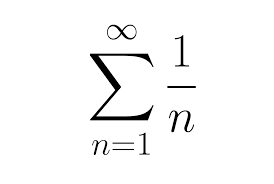
My “proof” (really only a sketch of one, as presented here), starts like this:
“What’s the probability that a natural number is relatively prime to all the primes?”
The answer to this question is, of course, 0.
More formally, we can write: the product of (1-1/p) multiplied over the primes approaches 0 as p increases without bound.
This can be rewritten as (with lots of formal checking): the product of (1/(1-1/p)) multiplied over the primes increases without bound as p increases without bound.
This can be rewritten as (with even more formal checking): the product of (1+1/p+1/p^2+1/p^3+…) multiplied over the primes increases without bound as p increases without bound.
This can be rewritten as (with so much formal checking): the sum of 1/n over the naturals increases without bound as n increases without bound.
This implies the divergence of the harmonic series.

 beavers Who are Busy
Leave a comment